Oct 11, 2023 | BACDU News, Events & Conventions
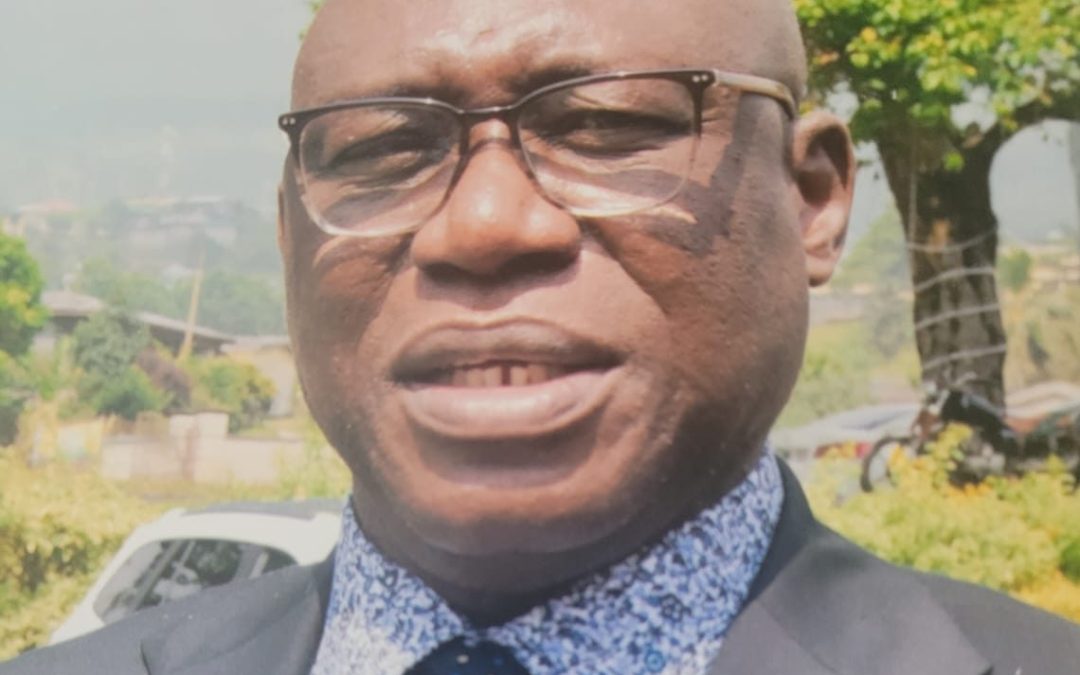
Nathaniel M. Bebe
Chairman/CEO BACDU USA Inc.
A Word of welcome presented by BACDU-USA Inc. Chairman/CEO during the 18th National annual convention Holding in Frankfort Kentucky on the 1st day of July 2023.
Mr. Secretary General
Members of the executive Committee
Bakundu Title Holders
Brothers and Sister of the Bakundu Tribe
Invited Guests
Once again it is my great pleasure to welcome each and everyone to this 18th National annual BACDU USA Inc. Convention holding here in the capital city of Frankfort in the State of Kentucky.
I want to use this opportunity to thank our committed brothers and sisters in Frankfort Kentucky for all their efforts and endeavors to the hosting of this very important 18th national annual convention of BACDU USA Inc. They are in fact, a people to be reckoned with because they have not given room for self.
This important working session grouping will reflect and ponder on a variety of issues most importantly to raise funds to facilitate the empowerment of our youth population with technical and entrepreneurial skills enabling them to open businesses of their own based on the fast changing of the economic situation of the our society and in the same sense of reasoning to review and proactively translate our convention theme which states “Sustainable Cultural and economic development for the Bakundu communities into a pragmatic reality.
During the course of this meeting the leadership of BACDU USA Inc. of which all of us are partners tied to the same stake will engage in a purposeful dialogue which will be reflective on how best we can strategize our resources for the optimal betterment of the Bakundu people and their communities. I sincerely hope that the little time we will have to spend together as a close bonded family especially for those of us who were able to make will go a long way to strengthen our ties and to give us a fuller understanding and sense of belonging why we should have to commit, recommit to a common cause especially that of giving back to our communities and not forgetting where we come from to the extent of understanding that a peoples culture is their identity. Identifying ourselves to culture will give us the power and authority to be stable in a destabilized world and will enable us to walk in boldness in a world full of fear and disaster.
My brothers and sisters even though BACDU-USA Inc is an independent entity based on legally based principles, it is also an instrument of development in any community. To put it into perspective it is capital in itself which when well managed and put to work it will be very productive and will benefit the community because no individual owns it. It is owned by the community as a whole in this case the Bakundu community. Let us not shy away from it and point fingers to other forces making it a reason to slide away from. Let us use it to help surmount our tribal challenges because these tribal challenges are simply difficult tasks that test the ability, skill and commitment of a people and we can as a people know that great opportunities are wrapped in great challenges. Remember as I once said during one of our come together, that half- hearted commitment can be considered as an act of ignorance. We are all children of one tribe which implies that we have a common heritage and this alone should touch our hearts and unite us more than anything with the knowledge that charity begins at home. One of the most referenced authors Sir Thomas Browne and English Physician and a theologian stated thus “ But how shall we expect charity towards others when we are uncharitable to ourselves, charity begins at home is the voice of the world” Let us know that charity is love and love begins in our homes and in our roots and this should be blended with commitment. It is about time to start learning how to cherish, nuture and groom that which is ours first before venturing out.
My fellow tribes people the Bakundus are not only reasonable but are a people conscience thus we cannot accept to resign our obligations and responsibilities by refusing to align, commit and to be part of what identifies us. Hope our mentality will begin to change and be adjusted to measure up to a reasonable people and a people of conscience that we are. People tell those who are not here either by design or other wise that it is high time they don’t shy away from their identity. Let them join those who are already here to help propagate their culture and identify themselves with their people. Register now and pay your dues and join us to look for better ways to improve and better ourselves and our people.
Finally I will like to express my heartfelt gratitude to all of you who have supported and partnered me and this “effort” to attain these even though slow but the strides have been steady with a very limited committed people. We have together with this consistent small group transformed BACDU USA since its creation in November 29th 2004 in Frankfort Kentucky into a non for profit entity and we are proud to indicate that we are presently sponsoring at 100% four youths (there girls and a boy) in Cameroon Opportunity Industrialization Center (Cameroon OIC) in different technical and Vocational disciplines and plan to continue with the program to include more youths. These four youths come from four of the thirty- seven Bakundu villages in the South western Region of Cameroon.
I pray and ask the Almighty God the giver and provider of life to continue to bless us as individuals and BACDU USA Inc as an entity whose main goal is to bring us together for developmental purposes. I also ask for journey mercies back to your various destinations for those of you who have come from out of states.
Thank you all very Sincerely and welcome to the 18th national annual BACDU USA Inc convention of 2023.
May God bless BACDU USA Inc.
May God Bless the USA
Long live BACDU USA Inc and its people
Long live the people of the USA
Nathaniel M. Bebe
Chairman/CEO BACDU USA Inc.
117 White Cliffs Lane
Frankfort KY 40601
502 319 1362
Jun 29, 2019 | Events & Conventions, Publications
Mr. President of OCA USA
Your Royal Highnesses;
Distinguished Invitees;
Dear Brothers and Sisters.
I. Plan of Presentation
Formalities: Permit me to first of all express my joy of being here today accompanied by my dear wife Josephine. Our presence here was neither planned nor dreamed of. But we are here by the Grace of God and the machinations of the Cameroon government that decided to send me to Washington to open a Tourism Information Bureau for Cameroon. This bureau covers the continents of North and South America. We are happy to be here with my children.
That said, let me thank the President of OCA, Tata Fred Mboe Mediko for giving me the opportunity to stand before you to talk about issues that hinder the progress of Bato ba Oroko. I can guess why he chose me for this task. It is because I have lived among and interacted with the Oroko people for over half a century. This however, does not make me an expert in Oroko affairs. I would have loved to talk about the beauty of the Oroko women. This would have been easier for me because I was born by one, and I have been living with one for the past 32 yrs and that union has produced some very beautiful Oroko ones.
I thank God for the very warm welcome my wife and I have received from many of you. I lack words to express myself but I pray God to bless you abundantly.
II. What is said about the Oroko Problem?
Distinguished Guests, Ladies and Gentlemen,
The people who call themselves Oroko are made up of ten tribes: Bakoko, Bakundu, Balondo Badiko, Balondo Banaga, Balue, Batanga, Bima, Ekombe, Mbonge and Ngolo tribes. They are found in two administrative divisions of the South West Region of Cameroon – Meme and Ndian Divisions and together have built 205 villages.
From these statistics we cannot deny the fact that the Oroko people constitute a major grouping in the South West Region of Cameroon, and it follows therefore that we are expected to make a reasonable contribution or create a great impact in all domains of our national life. In other words we are expected to make a reasonable contribution in the economic, cultural, social and political development process of our beloved country Cameroon. In the same vein, we are entitled to a corresponding; an appropriate or befitting share of the national cake.
The issue here is how much is our contribution and how much is our share of the national cake? The answers to these questions calls for the drawing-up of a statement of account of Oroko people both in the national and international context.
When this is done, we will then be able to make a concrete statement about our pace or state of development. Whether we are progressing at an acceptable pace or we are stagnating or regressing. This is a monumental task requiring a scientific study based on the analysis of available facts and figures. It can be done and it should be done.
Writings about the various Oroko tribes can be found in German and English archives and are growing steadily in the archives of the various Universities in Cameroon. This is as a result of the increasing number of Oroko students graduating with post graduate degrees from these universities. Unfortunately literature concerning the performance of Oroko people as a group is very scarce.
However, the few who have addressed this issue are of the opinion that the Oroko people are hospitable, honest, trustworthy and peace-loving. They say that the people are blessed with geographic and climatic conditions which give them enormous economic potential. Hence, the area they occupy is famous for the cultivation of cash crops like cocoa, rubber, coffee, palm trees just to mention but a few. They also can produce all kinds of food crops. Even their sub-soil is full of minerals. And they conclude by saying that in terms of natural resources, their inheritance (or contribution) is outstanding, if not monumental. These are very strong points in favour of the Oroko people. Compared with their achievements, one of the writers, an economist and the most knowledgeable in the Oroko way of life, Mr. Mosamai Emanuel Dibo, in his pamphlet “BO CHANI’SE” says that:
“From the evidence before us it is no secret to conclude that our people have contributed far below their potentials in terms of human resources and in the scramble for national merits and honours. In fact in the recognition and awards table, they do not feature prominently, be it in the domain of academics, finances and economy, culture, sports and politics. This is the irony. A people on whom nature has showered all her material goodness turns out to be handicapped in the race for achievements. The truth is that many of our people are not aware of their predicament and are therefore not in a suitable position to assess themselves in the race of honours vis-à-vis either other groups or their potentials. In actual fact and if we are obliged to give a statement of account of our achievement vis-a-vis our resources, it will be a deficit balance.”
He continues:
“For a simple and for a clearer illustration of our situation, permit me to ask a few questions:
- How many millionaires have we?
- How many eminent farmers have we?
- How many civil administrators have we?
- How any PhD holders and Professors have we?
- How many senior army officers and policemen have we?
- How many medical Doctors have we?
- How many engineers do we have?
- How many musicians have we?
- How many distinguished sports men have we?
- How many practicing lawyers have we?
- How many car owners have we?
- How many city land lords have we?
- How many first class or second class chiefs have we?
- How many real politicians have we?
- How many of us are even there or what is our population vis-à-vis our natural resources?
These questions apply to all of us at home and abroad.
This list of questions sounds elitist. Let us add the following:
- How many native carpenters have we in our villages?
- How many native tailors have we in our villages?
- How many native builders have we?
- How many native Petty traders have we?
- How many truck pushers have we?
- How many tire repairers have we?
- How many black smiths have we?
- How many! How many! How many?
- ETC, etc.
The common answer to these questions is that we have a number, in each case, which is far from enough”.
My dear brothers and sisters, when I received the letter inviting me to talk on this issue I was so frightened that my first instinct was to turn dawn the request. But then when I thought of this fact that many of us here are not conscious of our perplexing situation I changed my mind although I knew that I could not provide answers or solutions to the problem raised. I accepted because I thought it was time to formally state the problem in a forum like this one – living Oroko organization. And provoke the minds of the elites in the American Diaspora to start reflecting on what to do about the issue of our collective development or advancement.
III. Why and how do we find ourselves in this situation?
Many of us have attributed the situation to internal and external causes:
- We are ignorant of our situation.
- We are not many enough to take advantage of what nature has given us.
- We do not take education very seriously.
- We give too much importance to ceremonies (funerals).
- We are too timid in our undertakings .
- We are not proud of ourselves and our tribe .
- We are nonchalant and lazy .
- We are not ambitious (how do we perceive life) .
- We are not united .
- We are not well organized culturally, we are too loose .
- We do not have good leadership and our people cannot be led etc, etc .
- We have been invaded by strangers .
- We are too generous to strangers
My dear brothers and sisters,
We can add many other reasons, but we will need another time to enter into the details of each of these issues.
What have we been doing all this time to solve these problems and how far are we succeeding?
One thing is certain our forefathers were conscious of their situation and even conscious of the fact that some of these problems where beyond the efforts or scope of the individual, family or village to solve. So they initiated a number of collective solutions to some of them:
- In the field of education, the village came together and sponsored bright children to school.
- In the economic domain some elite came out with thrift and loan schemes.
- In the cultural and development domain cultural associations were born at different levels.
How far did these measures go? This is another domain of study.
With regards to the Oroko Cultural Association, Mr. Mosamai said this: “… our forefathers, conscious of the challenges that they faced with regards to the march towards civilization and development, the Oroko Cultural Association was created. This was in respect of the universal dictum that ‘united we stand and divided we fall.’ They believed that there must be unity of purpose and unity in action to effectively face collective challenges. The big idea was that if we organized ourselves into a larger integrated whole, we will create some of the most important conditions for securing a more solid control over our resources, for raising our capacity to produce what we need and consequently, for raising the living standards of our people.”
This assumption is even more relevant today as life has become more challenging and complex.
Distinguished guests, ladies and gentlemen,
I cannot for sure give you the exact date that the Oroko cultural association was formed but what I am certain about is that in 1972 an Oroko cultural Almanac was published with the picture of Late Chief Hon. Chief Victor Ngomo Obie prominently placed with the title of TATA of OROKO printed below. This simply implies that an Organization of Oroko people had been created with Chief V.N. Obie at the head, sometime before the publication of the Almanac. We need to know how the association fared from 1972 to 1995 when it changed from an Association to a Union. This is a good area of research for a PhD Thesis.
This association is today called The Oroko Cultural and Development Union (UDECU-June 1995 at BIG BEKONDO again at the behest of Tata Nganga Obie III).
The June 11th 1995 National Executive Council stood as follows:
- National President. – Tata Okia, HRH Chief Henry Namata Elangwe (Late)
- General Secretary – Chief Esoh Itoh ( Late)
- General Treasurer – Tata, HRH Chief John Bake Mokambe (Late)
- Financial Secretary. – Tata Nganga, HRH Chief Victor Obie (Late)
- Organising Secretary – Mr. Ngembane Manasseh (Late)
42 years have gone and one is tempted to ask questions as to what the situation of the Oroko people has become and what the state of the Union is.
As of February 5th 2014 when I left Cameroon for the US, one can be tempted to say that UDECU has effective existence only outside of the Oroko land. Where is exists in Meme and Ndian it is in isolated cases and even in those cases it functions occasionally in cases of deaths and some other ceremonies.
UDECU has no cells and no branches. It presently has not met even at the executive level since 1998 for there is no body to convene it. Among the older generation of Oroko people who created it only Chief Esoh Itoh and Justice Benjamin Itoe one of the Advisers and the man who supervised the writing of the constitution and Chief can do something.
My dear brothers and sisters as we can see the Oroko Cultural Association exists and functions only in the United States of America. You have to think of ways to cause the home or mother organization to be better organized and functional otherwise your efforts here to help our people back home will be in vain. Already you see what happens with projects you initiate and containers you send back home.
Another question that comes in mind is: How prepared or how ready is the next generation of Oroko sons and daughters to take over the mantle of Oroko leadership?
This Union is considered to be a Union of two hundred and five (205) villages of ten tribes in two divisions (Meme and Ndian) in the South West Region of the Republic of Cameroon as follows:
Brothers and Sisters, you can see that our association, as you still call it, is a huge body which needs greater unity, greater Oroko pride and careful handling.
We cannot afford to be divided, torn apart by internal feuds and wrangling. Unity is power and division is weakness. This by no means implies that we become a perfect group. It simply means that where internal misunderstandings break-out, every effort should be made to strike at reconciliation. To dispel any doubts, it must be emphasized that unity does not demand that we lose our individual or tribal or village identities. No. But it demands that the general interest overrides individual, tribal or village interests.
IV. Conclusion
Distinguished Guests, Ladies and Gentlemen,
Let me quote Mr. Mosamai again “We can say that our present situation is pathetic and the task ahead onerous. To succeed, it shall be necessary for us to face these problems with a promising sense of dedication and seriousness. We have to prepare our minds and bodies for the sacrifice that is expected of us. It should be born in mind that to eradicate the poverty in which we are engulfed, the process must be undergone and the sufferings must be endured. No hastened deadline or indolent attitude will make it. We must be prepared to make sacrifices and embark on courageous decision-making and implementation.
We end by praying to the Almighty God to give us the serenity to accept what cannot be changed, courage to change what should be changed and wisdom to distinguish between the two; these we ask in Jesus name, Amen.”
Thank you for your kind attention
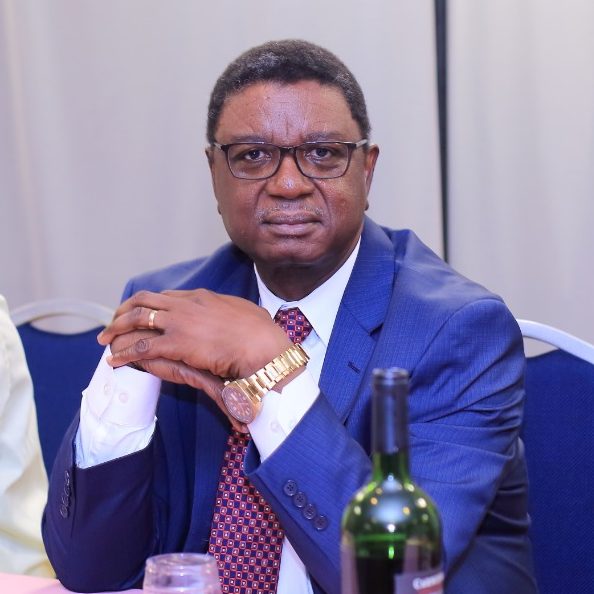
H.E. DANIEL MODIKA MUKETE
SESE DIKALA WA BAKUNDU